






Seaweeds have been used in agriculture for hundreds of years, and as with many other traditional farming methods, there are very good agronomic reasons behind this. Farmers have learned over the years that using seaweeds improves the quality and resilience of their crops, but what previous generations did not know was why these benefits occur. This improvement is not down to simple nutritional benefit alone. In fact, seaweeds themselves contain very little in the way of essential macro nutrients, it’s their broad range of bioactive components that builds crop resilience and productivity.
Ascophyllum nodosum is a seaweed species distributed exclusively in the North Atlantic Ocean, off the North American and Northern European coasts. It grows in the intertidal zone of the shoreline under very demanding conditions, being immersed in cold seawater at high tide, and exposed to the atmosphere at low tide. Depending on season, Ascophyllum experiences heat dehydration or chilling and freezing stresses on a repeated basis. It can thrive in very warm as well as sub-zero temperatures (-25°C in winter to over 40°C in summer).
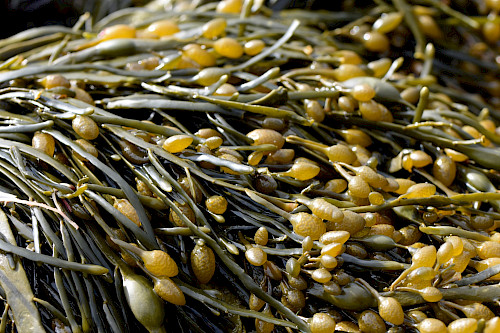
Ascophyllum has adapted to life in the intertidal zone by evolving its biochemical compounds to overcome the extreme stresses found in this harsh environment. Here are some examples of the bioactive components and how they can benefit crop growth:
- Alginic acid helps chelate nutrients, making them more available to plants and serves as a food source for beneficial soil microbes.
- Betaines help plants adjust water levels, salt and other substances within cells, to better mitigate abiotic stress and protect chlorophyll.
- Mannitol protects and adjusts the amount of water in plant cells in times of water-related stresses.
- Fucose-containing polysaccharides increase antioxidant levels and help protect plants from stress in general.
- Organic acids help plants produce energy and encourage production of new compounds.
There are a number of other species of seaweed from around the world that have also been shown to improve crop production and resilience. Brown seaweeds, including Sargassum, Laminaria digitata and Ecklonia maxima are all widely harvested for use in agriculture. Sargassum and Ecklonia thrive in warm tropical waters where they aren’t subject to the harsh environments that Ascophyllum grows under, so the range of bioactive compounds they contain to combat stress is significantly limited.
Ascophyllum is the most widely researched marine alga, with over 2,500 published academic articles describing its components, functions and benefits.
The Glenside range of seaweed-based products including Marinure and Marinure Extra uses only sustainably harvested Ascophyllum nodosum as its seaweed source. Glenside uses Atmospheric Medium Temperature Alkaline extraction to liberate high levels of bioactive components from the seaweed. This proprietary extraction process ensures these compounds are extracted in their most pure and active state, as can be demonstrated using Nuclear Magnetic Resonance (NMR) spectroscopy to analyse and determine the concentration of the resulting organic compounds.
Ascophyllum extracts produced using this process have been shown to increase the expression of stress response genes. These genes upregulate production of osmolytes including proline that helps plants acclimatise & adapt to stresses. There is reduced damage by protecting plant proteins & plant cells integrity, and increased antioxidant production. These antioxidants include alpha tocopherol, ascorbic acid and super oxide dismutase help to prevent cell damage, and lead to faster recovery of higher stomatal conductance, and greater photosynthetic activity during the recovery process.
Further beneficial effects are to enhance stomatal regulation, reducing transpiration during heat and drought stress periods.
- Stimulates root initiation, elongation, and branching
- Quicker plant recovery and maintains productive growth
Field trials on Glenside seaweed extracts carried out over many years and on multiple fruit crops have consistently demonstrated increased root growth and shoot development in all crops. There is an increased number of strawberry crowns and fruit number and size is improved in apples. In addition, quality attributes such as firmness resulting in decreased degradation in storage have been achieved. These benefits have resulted in significantly increased yield and gross revenue, representing a fantastic return on investment.
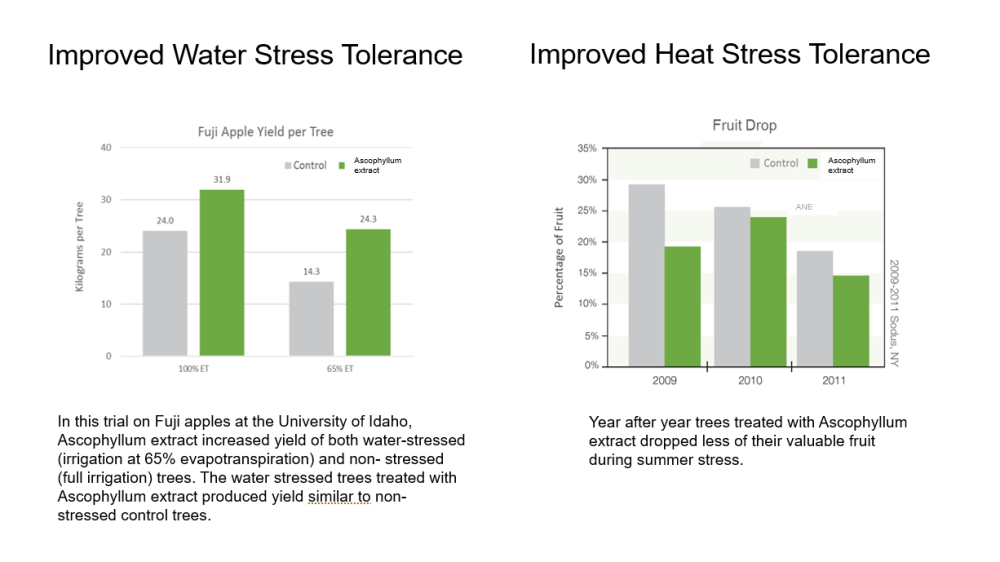
Table 1.
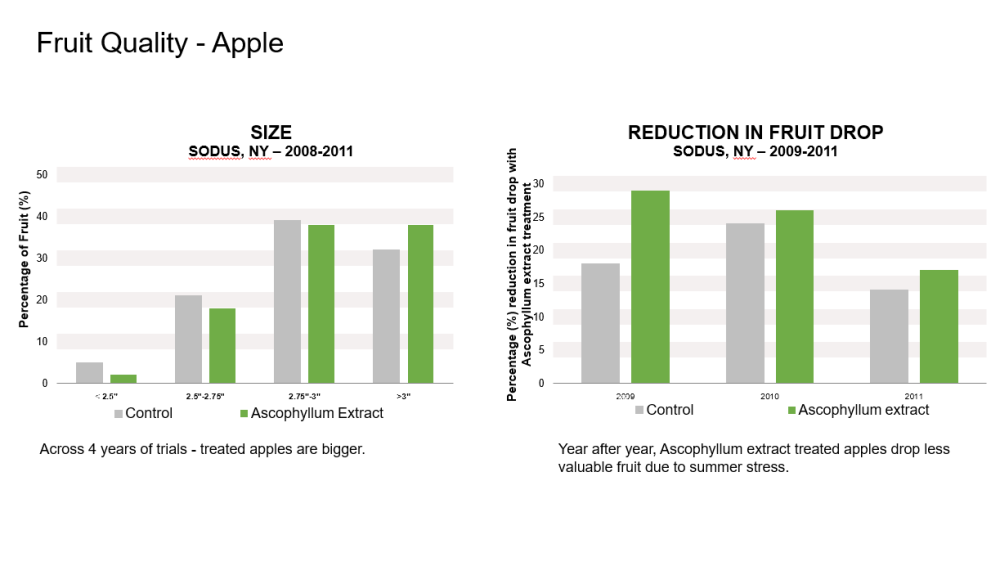
Table 2.
Hortifeeds will also be attending the following events this year:
- BCTGA Summer Road Trip - 4th June 2026, Stockeld Park Estate
- The Fruit Focus Show - 8th July 2026, Broadburne House, Kent
- The Four Oaks Trade Show - 2nd & 3rd September 2026, Cheshire
Looking ahead to 2026, we are excited to announce further participation in industry shows and conferences. More details will be shared in the coming months as we continue to support growers with innovative solutions and expert guidance.
We look forward to meeting many of you at these upcoming events!
Contact:
Hortifeeds – Park Farm, Park Farm Road, Kettlethorpe, Lincoln, LN1 2LD
Tel: 01522 704747
Email: info@hortifeeds.co.uk | Web: www.hortifeeds.co.uk
Share this page


